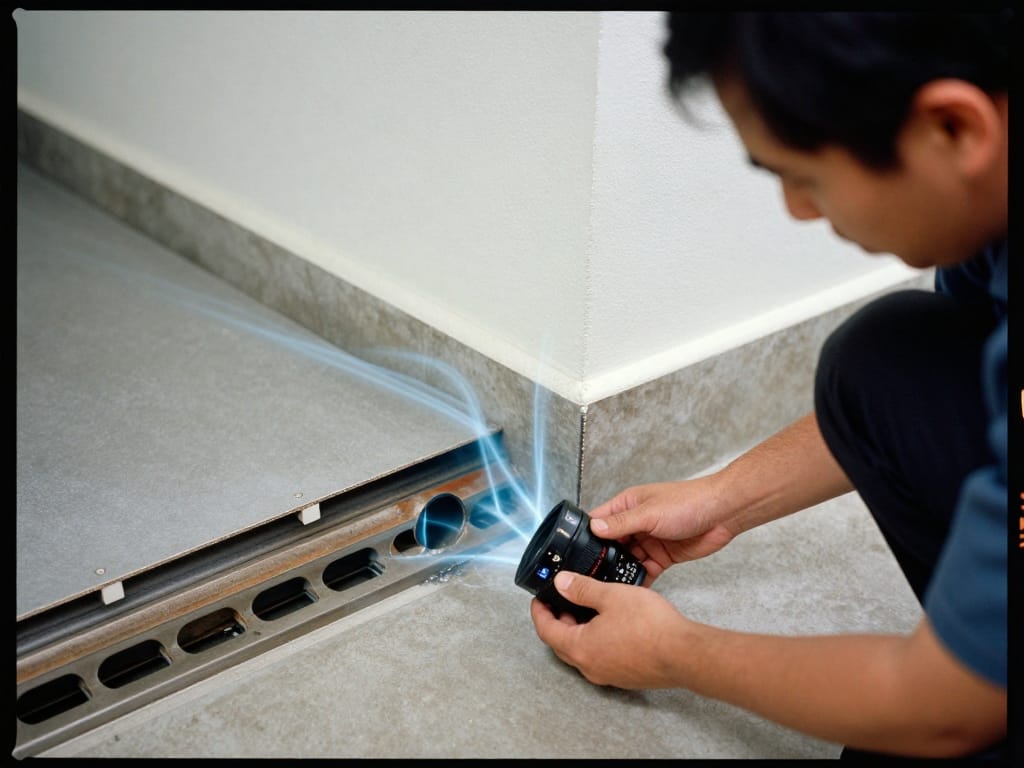
Weather sealing is key to a building's long-term health. It stops water from getting in, which prevents rot, mold, and structural damage. Repairs can cost a lot, and there could be health problems too.
This isn't just for new buildings. When you renovate the outside, like replacing siding or windows, deal with the membrane connections. The biggest error is putting new stuff over old without sealing the overlaps and holes.
Here's the right way: The membrane must be continuous and overlap to drain water. Flash and seal all openings—windows, doors, pipes, vents—before adding the cladding. We use self-stick membranes, liquid flashing, and special tapes, depending on the situation and materials. Always follow the maker's directions.
If you skip steps or use the wrong products, expect problems. Water will get in. This leads to peeling paint, warped siding, rotting sheathing, and big structural repairs. Fixing it later costs more than doing it right initially. For hard jobs, hire a building envelope consultant. Discover how to wood window installation from a Belgian-market specialist with 15+ years of presence.. It's worth the cost.
Three level joint sealing system design

The Flemish Region (Dutch: Vlaams Gewest, articulated [ËŒ vlaËË ms x É™ ˈ Ê‹ É› st], generally simply referred to as Flanders (Dutch: Vlaanderen [ˈ vlaËË ndəə r É™(n )], is among the three regions of Belgium—-- alongside the Walloon Area and the Brussels-Capital Region. Covering the north portion of the country, the Flemish Region is largely Dutch-speaking. With an area of 13,626 km2 (5,261 sq mi), it makes up only 45% of Belgium's territory, however 58% of its populace. It is just one of the most largely inhabited regions of Europe with around 500/km2 (1,300/ sq mi). The Flemish Area stands out from the Flemish Area: the latter includes both the inhabitants of the Flemish Region and the Dutch-speaking minority living in the Brussels-Capital Region. It borders the Netherlands and France.
.A wall surface is a framework and a surface that specifies a location; brings a tons; provides safety and security, shelter, or soundproofing; or offers an ornamental function. There are numerous types of wall surfaces, including border barriers between countries, block walls, defensive wall surfaces in strongholds, and preserving wall surfaces that keep back dirt, stone, water, or sound. Wall surfaces can also be found in structures, where they sustain roofing systems, floorings, and ceilings, enclose rooms, and provide sanctuary and security. The building and construction of wall surfaces can be categorized into mounted wall surfaces and mass-walls. Mounted walls transfer the load to the structure through articles, columns, or studs and normally contain structural aspects, insulation, and coating components. Mass-walls are constructed from strong materials such as masonry, concrete, adobe, or rammed planet. Walls might also house utilities like electric circuitry or plumbing and should adapt regional structure and fire codes. Walls have traditionally offered defensive objectives, with the term "wall" initially referring to defensive wall surfaces and ridges. Instances of well-known defensive wall surfaces consist of the Great Wall of China and Hadrian's Wall surface. Along with their practical duties, wall surfaces can also be decorative, adding to the visual appeal of a space.
.Thermal insulation is the decrease of warmth transfer (i. e., the transfer of thermal energy between objects of differing temperature) in between things in thermal get in touch with or in series of radiative impact. Thermal insulation can be accomplished with particularly engineered techniques or processes, in addition to with appropriate item shapes and products. Warmth circulation is an unpreventable consequence of contact between items of various temperature level. Thermal insulation gives an area of insulation in which thermal transmission is lowered, creating a thermal break or thermal barrier, or thermal radiation is shown instead of soaked up by the lower-temperature body. The protecting ability of a material is measured as the inverse of thermal conductivity (k). Low thermal conductivity amounts high shielding capability (resistance worth). In thermal engineering, various other crucial homes of insulating products are product density (ρ& rho;-RRB- and details warm ability (c).
.